

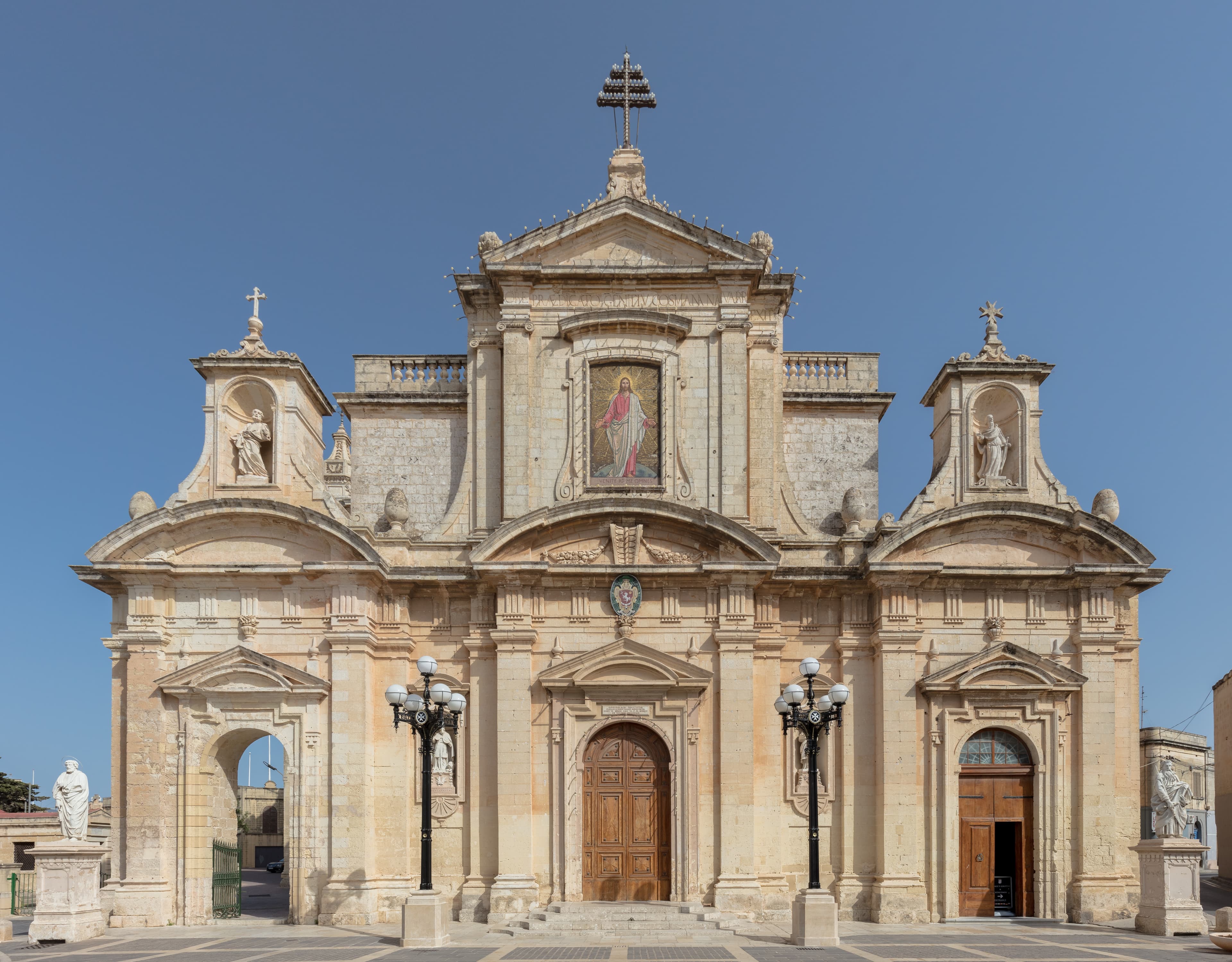
Rabat
The lived-in town beside Mdina holds Malta's most ancient layer of history: the grotto where St Paul sheltered after his shipwreck, the island's largest Roman-era catacombs, and a Roman villa with original mosaics still in situ.
Diego Delso
Key facts
- Best for
- St Paul's Catacombs — Malta's largest ancient underground burial complexSt Paul's Grotto — the cave where the apostle reportedly sheltered after the 60 AD shipwreckWignacourt Museum and its Roman bath foundationsRoman Villa (Domus Romana) — original 1st-century BC mosaic floorsSt Agatha's Catacombs — smaller complex with early Christian frescoesCombining with Mdina on the same half-day visit
- Getting there
- Bus routes 52 and 53 from Valletta run directly to the Rabat/Mdina terminal — roughly 45–55 minutes; the bus stop is shared with Mdina
- Route 51 also serves Rabat from Valletta via Birkirkara
- The Rabat bus terminus is about 300 metres from Mdina's main gate — an easy walk
- St Paul's Catacombs are a 5-minute walk from the bus terminus through Rabat's main square
- Taxis and rideshare from Valletta take about 25–35 minutes
- Rabat is easily paired with Mdina in a single half-day excursion
Rabat and Mdina share a bus stop and a history. The two towns are physically adjacent — separated only by the medieval gate into Mdina's walled interior — but they feel completely different. Mdina is preserved, quiet, and almost theatrical in its architecture. Rabat is an ordinary Maltese town where people live, shop, and go about their day, and it rewards a slower look. Beneath and around it lies the densest concentration of early Christian and Roman remains in Malta: St Paul's Grotto, two separate catacomb complexes, the Wignacourt Museum set inside a former Roman bathhouse, and a reconstructed Roman villa with original mosaic floors.
Why visit Rabat?
Most visitors to this part of Malta come for Mdina — the silent medieval city on the hilltop — and treat Rabat as an afterthought or a place to find a bus home. That is a significant underestimation. Rabat has at least as much to offer as Mdina and in some ways more, because what you find here is genuinely ancient rather than carefully preserved medieval. The town sits over Roman and early Christian Malta: layers of history that you can walk down into literally, in the form of catacombs and grottos cut directly into the limestone.
The practical case for Rabat is also straightforward. It shares a bus terminus with Mdina, costs very little to visit (Heritage Malta sites have modest entrance fees, the Grotto is free), and takes about two to three hours to see properly. Add the two hours most people spend in Mdina and you have a full half-day from Valletta without needing a car.
St Paul's Catacombs represent the most extensive ancient underground burial complex in Malta — and among the largest in the Mediterranean.
St Paul's Catacombs
The catacombs are the main reason to come to Rabat and justify the bus journey on their own. Hewn from the soft globigerina limestone between the 3rd and 9th centuries AD, they form a labyrinthine network of tombs, agape tables (circular stone tables used for funeral banquets), and burial niches extending beneath a substantial area of the town. Heritage Malta maintains the site and runs guided tours; the lighting and accessible walkways make exploration easy even for visitors not accustomed to underground sites.
What makes the catacombs significant beyond their scale is the evidence they offer of a religiously mixed community: Jewish, early Christian, and pagan burials exist in close proximity within the same complex, a detail that archaeologists read as evidence of the tolerance that existed in Roman Malta during this period. The site covers several distinct catacomb clusters connected by tunnels and passages.
St Paul's Catacombs at a glance
- Period
- 3rd–9th century AD
- Managed by
- Heritage Malta
- Entry
- Ticketed — Heritage Malta site
- Duration
- 45–75 minutes with guided tour
- From bus terminus
- 5-minute walk through main square
St Paul's Grotto and the Wignacourt Museum
Beneath the Basilica of Saint Paul in Rabat's main square is the Grotto of Saint Paul — a cave that Maltese tradition holds as the place where the apostle lived during the three months he spent on the island after his 60 AD shipwreck off the coast of what is now St Paul's Bay. The cave is small and atmospheric, decorated with a statue of the apostle and visited by pilgrims from across the world. Entry is free; a small donation is customary.
The Wignacourt Museum above and around the Grotto occupies a complex that incorporates a former Roman bathhouse, a 16th-century priests' residence, and more recent additions. It houses a collection of Roman artefacts, religious art, and archaeological finds from the site and surrounding area. The Roman bath foundations, visible in the basement level, give a concrete sense of how extensively Rabat was occupied during the classical period.
The Domus Romana
A short walk from the catacombs, the Domus Romana is a Roman townhouse dating to the 1st century BC, preserved and displayed under a purpose-built museum structure. The highlight is the original mosaic floor, which has survived in remarkable condition and depicts geometric patterns typical of Roman domestic decoration of the period. The museum also holds a collection of Roman-era finds from Malta, including ceramics, sculpture, and glass.
The Domus Romana is a Heritage Malta site with a separate entrance ticket from the catacombs, though combined tickets are available. It is compact — plan 30–45 minutes — but the quality of the preservation is exceptional.
St Agatha's Catacombs
A few minutes' walk from St Paul's Catacombs, the smaller St Agatha's complex is notable for its early Christian frescoes — painted scenes from the life of St Agatha, a Sicilian martyr, that represent some of the oldest painted decoration surviving in Malta. The tradition connects St Agatha herself to Rabat, where she is said to have sought refuge from persecution in Sicily during the 3rd century AD. The catacombs are managed by the Carmelite Friars and require a guided visit.
Rabat town
Beyond the heritage sites, Rabat is a functional Maltese town that makes a pleasant contrast to the curated atmosphere of Mdina next door. The main square in front of the Basilica of Saint Paul is the social heart: there are a handful of cafés and restaurants where you can eat a proper lunch for a reasonable price, a marked change from the tourist-facing establishments inside Mdina's walls. The back streets have the slightly worn, domestic character of a town where people actually live rather than one that has been optimised for photography.
Combining Rabat and Mdina
The standard half-day from Valletta runs: bus to Rabat terminal → catacombs → Wignacourt Museum and Grotto → lunch in Rabat → walk 300 metres through the gate into Mdina → Mdina sightseeing → bus back to Valletta. This covers the essentials of both towns without rushing. If you want to add the Domus Romana and St Agatha's Catacombs, allow a full day rather than a half-day, or prioritise the two main catacomb sites and leave the Domus for a second visit.
Early arrival (before 10 am) is advisable during summer months. By mid-morning the Mdina gate and the streets inside are busy with tour groups; Rabat is less affected but the catacombs can get crowded around midday. The sites are open in the afternoon, but the midday heat on the exposed limestone streets makes a later start less comfortable in July and August.
Best time to visit
Spring and autumn give mild temperatures ideal for walking between sites and exploring the catacombs comfortably. Summer is busier and hot above ground, though the catacombs themselves stay cool year-round. Winter visits are quiet and pleasant — most sites remain open, and the lack of crowds makes the Grotto and catacombs particularly atmospheric.
Getting here from Valletta
Bus routes 52 and 53 run from Valletta directly to the Rabat/Mdina terminal. The journey takes approximately 45–55 minutes depending on traffic and stops. Route 51 also serves Rabat via a slightly different route through Birkirkara. All three routes stop at Rabat's main terminus, which is shared with the Mdina bus stop — the two towns are served from the same point.
From the bus terminus, St Paul's Catacombs are about a five-minute walk through the town square. The Wignacourt Museum and Grotto are adjacent to the Basilica of Saint Paul in the square itself. The Domus Romana is a further five minutes from the catacombs.
By taxi or rideshare from Valletta, the journey takes 25–35 minutes. From Sliema or St Julian's, add roughly 15–20 minutes. There is limited parking adjacent to the Rabat bus terminus if you are driving.
About this guide
Maintained by MaltaPathway
This guide is written from public sources and kept up to date where possible. MaltaPathway is an independent visitor guide and is not affiliated with any official body. Source policy, correction policy, and monetization disclosure live on the About and trust page.
Sources
Was this page helpful?
MaltaPathway is an independent guide and is not operated by or affiliated with the Government of Malta, VisitMalta, or any other public authority. Details such as opening hours, prices, and schedules can change — always check official or current sources before relying on time-sensitive information.