

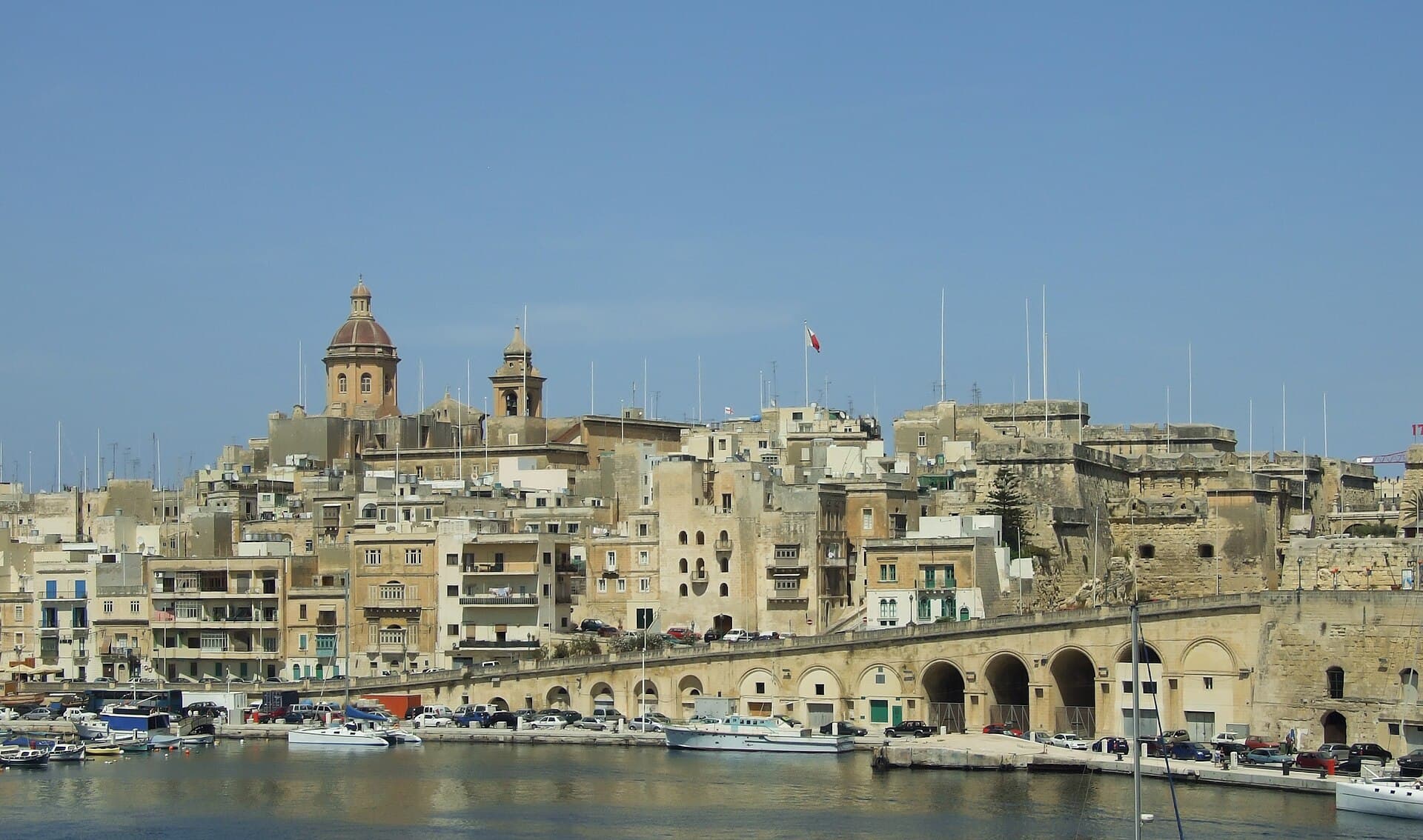
Birgu (Vittoriosa)
Fort St Angelo, the Inquisitor's Palace, and medieval alleyways — all a short ferry ride from Valletta across the Grand Harbour.
MrPanyGoff
Key facts
- Best for
- Medieval history and Knight Hospitaller heritageFort St Angelo and the Inquisitor's PalaceGrand Harbour ferry crossing from VallettaQuiet cobbled streets with almost no tourist crowdsWaterfront cafés with views across to Valletta
- Getting there
- Water taxi (dghajsa) from Valletta's Lower Barrakka landing — check current schedules at the waterfront
- Bus from Valletta: routes 1, 2, 3, 4 to Cospicua/Birgu area — allow 20–30 minutes
- Birgu itself is compact and pedestrian-only; walking is the only way around once you arrive
- Taxis and rideshare apps can drop to the Birgu gates; no car access inside the fortified town
- Official site
- https://www.visitmalta.com/en/a/birgu-vittoriosa/
Birgu, officially known as Vittoriosa, is the oldest of Malta's Three Cities — a peninsula of tightly packed limestone houses and fortified bastions that juts into the Grand Harbour opposite Valletta. The Knights of St John made it their first base in Malta in 1530 before moving to Valletta. The result is a district that is older, quieter, and far less visited than the capital, yet every bit as dramatic.
Why visit Birgu?
Birgu is what Valletta would look like if the crowds thinned out and the streets narrowed by half. Standing on the same Grand Harbour, separated from the capital by just 700 metres of water, it sees a fraction of the visitor numbers — and that is precisely its appeal. The water taxi crossing from Valletta's Lower Barrakka landing takes about five minutes and deposits you into a world of sixteenth-century fortifications, quiet convents, and cats sleeping in doorways.
The Knights of St John arrived in Malta in 1530 and chose Birgu — then a small fishing village — as their first base. They spent three decades here, rebuilding its defences, establishing their hospitals and auberges, and fighting off the Great Siege of 1565 before relocating to the purpose-built Valletta. The layers of that history are still visible in almost every street.
You spend an afternoon in Birgu and come back wondering why you spent so much time in Valletta.
Fort St Angelo
The fort at the tip of the Birgu peninsula is one of the most significant military structures in the Mediterranean. Its origins predate the Knights — there was a fortification here under Arab and then Norman rule — but the current structure was substantially shaped by the Order of St John. During the Great Siege of 1565, Fort St Angelo withstood an Ottoman assault for four months; Grand Master Jean de Valette directed the defence from here.
Heritage Malta manages the fort and offers guided tours. The views from the upper bastions across both sides of the Grand Harbour — to Valletta on one side and to Senglea on the other — are exceptional. Booking in advance is recommended during the busier spring and autumn months.
The Inquisitor's Palace
One of only three surviving Inquisitors' palaces in the world, this building operated as the residence and tribunal of the Apostolic Inquisition in Malta from 1574 to 1798. The rooms are remarkably intact: the tribunal hall, the Inquisitor's private apartments, the cells where prisoners were held, and the courtyard. The permanent exhibition puts the role of the Inquisition in Malta into historical and European context.
It is a sobering place, but a genuinely important one for understanding the political and religious dynamics that shaped Malta for two centuries. Heritage Malta operates the site; entry is paid and tickets can be bought on the day or booked online.
The Malta Maritime Museum
Housed in the old Naval Bakery — a long, elegant neoclassical building on the Birgu waterfront — the Maritime Museum covers Malta's relationship with the sea from the Knights to the Second World War. The collection includes figureheads, model ships, navigation instruments, and the ornate galley of Grand Master Perellos. It is one of Malta's better-curated museums and easy to miss on a Valletta-centred itinerary.
Walking the streets
Beyond the ticketed sites, Birgu rewards slow exploration on foot. The main street, Triq il-Majjistral, leads through the heart of the old town past auberges that once housed knights from different European nations. Side streets — some barely wide enough for two people — give onto unexpected courtyards and occasional views of the harbour. The Church of St Lawrence, the conventual church of the Knights during their Birgu years, anchors the main square.
The waterfront promenade on the harbour side has cafés with outdoor seating and direct views across to Valletta's fortifications. It is one of the few places in Malta where you can sit and take in the Grand Harbour without a crowd around you.
Getting here
The most atmospheric arrival is by water taxi (dghajsa) from Valletta's Lower Barrakka waterfront — a short, inexpensive crossing that has been made across this stretch of harbour for centuries. The service runs during daylight hours; check current operating times at the landing stage. Fares are paid on board.
Bus routes from Valletta connect to the Three Cities area; the journey takes 20–30 minutes depending on traffic. Several routes serve Cospicua, the largest of the Three Cities, from where Birgu is a short walk. If you are coming from the south of the island, buses from Marsaxlokk or Żabbar also reach the area.
Best time to visit
Spring and autumn give comfortable temperatures for walking the narrow streets. Summer is hot in the exposed bastions; July and August also bring cruise passengers to the area for short visits. December is quiet and mild.
Combining Birgu with Valletta
Birgu pairs naturally with Valletta as a full-day itinerary. Spend the morning in Valletta, take the water taxi across after lunch, and spend the afternoon in Birgu before taking the bus back or the ferry returning before sunset. The Grand Harbour from the water at dusk, with both cities lit up, is one of Malta's better views.
Alternatively, Birgu and Mdina make an interesting contrast: both are small, walled, and car-free medieval towns, but Birgu is coastal and focused on the Knights' military heritage while Mdina is inland and dominated by its cathedral and aristocratic palaces. The 3-day Malta itinerary on this site combines both.
About this guide
Maintained by MaltaPathway
This guide is written from public sources and kept up to date where possible. MaltaPathway is an independent visitor guide and is not affiliated with any official body. Source policy, correction policy, and monetization disclosure live on the About and trust page.
Sources
Nearby places
Related guides
Was this page helpful?
MaltaPathway is an independent guide and is not operated by or affiliated with the Government of Malta, VisitMalta, or any other public authority. Details such as opening hours, prices, and schedules can change — always check official or current sources before relying on time-sensitive information.