

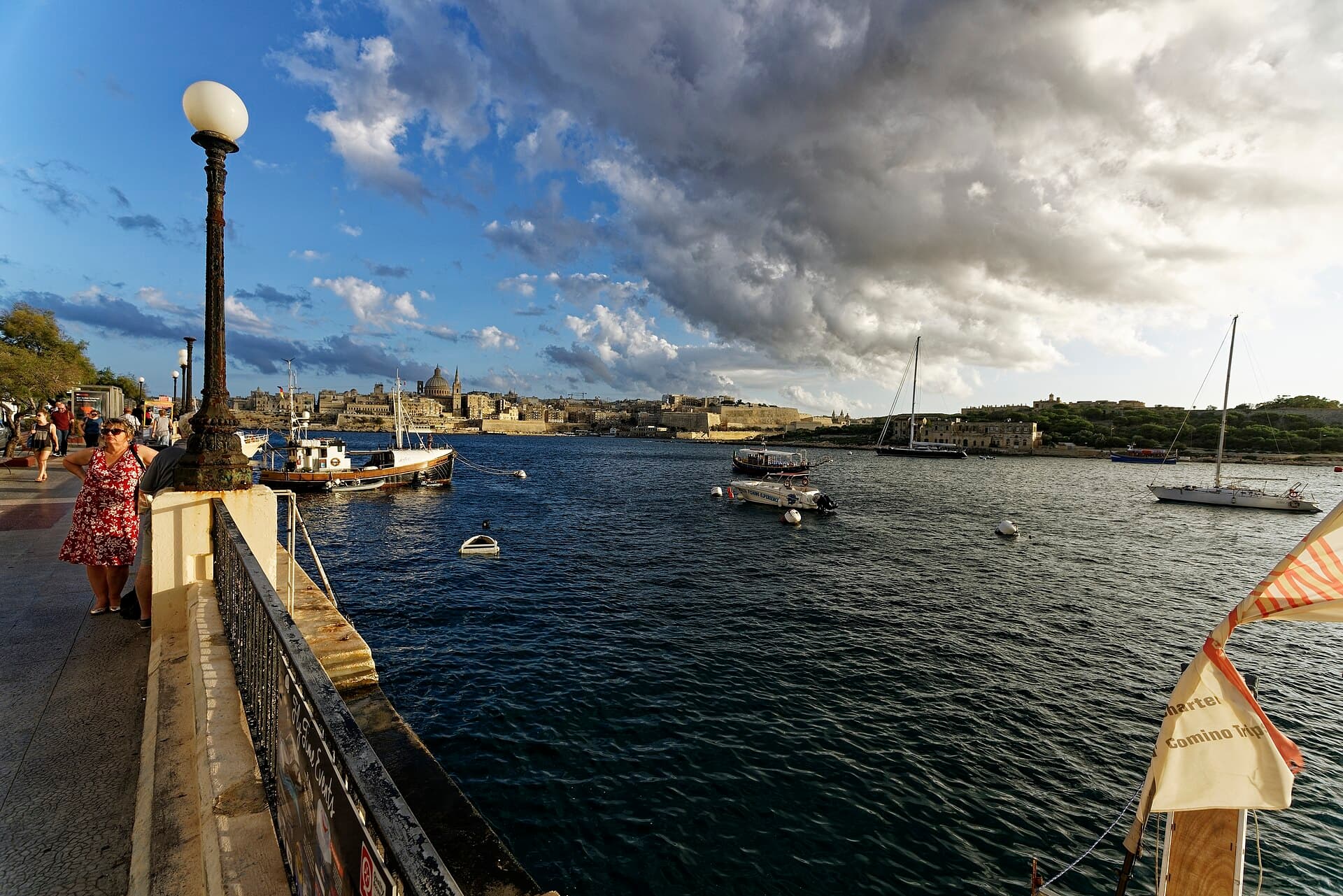
Sliema
Malta's most visited coastal town — a long seafront promenade, a dense concentration of hotels and restaurants, and a 10-minute ferry crossing to Valletta. Sliema is less a sight in itself and more the practical heart of tourism on the island.
Txllxt TxllxT
Key facts
- Best for
- Seafront promenade walks and sea swimming off rocksFerry crossing to Valletta (10 minutes)Wide choice of restaurants, cafés, and barsHotel and self-catering base for the islandEasy bus connections across Malta
- Getting there
- The Sliema–Valletta ferry departs from the Strand in Sliema and arrives at the Valletta waterfront below City Gate. Crossings run regularly throughout the day. The journey takes around 10 minutes and is significantly faster and more scenic than the bus.
- Bus routes from Sliema serve Valletta, St Julian's, Paceville, Mdina (via Rabat), Mellieħa, and the airport. The main Sliema bus stops are on The Strand and Bisazza Street. Check current Malta Public Transport schedules before travelling.
- From Malta International Airport, take a bus to Valletta and connect onwards, or take a direct taxi or rideshare. Journey time by taxi is approximately 20–30 minutes depending on traffic.
- Sliema is flat along the seafront and promenade. Inland streets rise toward higher ground but the main visitor areas are accessible on foot without significant gradients.
- Official site
- https://www.visitmalta.com/en/a/sliema/
Sliema sits directly across Marsamxett Harbour from Valletta, connected by a passenger ferry that takes around 10 minutes — one of the most pleasant short crossings in the Mediterranean. The town grew from a small fishing village in the late 19th century into Malta's most densely developed coastal strip, and today it is the first choice for accommodation for many visitors. The seafront promenade, known locally as the 'front', runs along Tower Road from Sliema Point northward and is one of the best flat walks on the island — backed by cafés, restaurants, and hotels, with sea swimming off the rocks below. Sliema lacks the grand historic monuments of Valletta or the medieval atmosphere of Mdina; its appeal is practical and social. It is well served by buses, has the largest concentration of restaurants of any town in Malta, and gives quick access to St Julian's to the north and Valletta by ferry to the south. The Point shopping mall provides covered retail in a hot climate. Sliema Creek, the inlet between Sliema and the Msida marina area, has its own low-key waterfront and a working-boat character distinct from the promenade. Accommodation ranges from budget hostels to four-star hotels. Many visitors who are primarily interested in Valletta and cultural sites base themselves here for that reason: it is five minutes by ferry from the Co-Cathedral and fifteen minutes by bus from the ancient temples.
“Sliema is where you sleep; Valletta is where you go. The ferry between them is one of the best ten minutes in Malta.”
What to do in Sliema
The seafront promenade
The promenade along Tower Road is Sliema's signature feature — a continuous flat walk along the rocky coastline with the sea to one side and cafés, restaurants, and apartment blocks to the other. It runs from Sliema Point in the south to Balluta Bay in the north, where it becomes the St Julian's seafront. The total walk from point to point takes around 30–40 minutes at a comfortable pace. Early morning and late afternoon are the best times for the walk — busy with local residents and walkers as well as visitors.
Sea swimming
Sliema has no sandy beach. Swimming is off flat limestone rocks and concrete lidos along the seafront. The water is clear and generally calm in summer. Popular swimming spots include the rocks around Sliema Point and the terraced lido areas along Tower Road. Rocky entry into the sea can be awkward — water shoes are useful. The Qui-Si-Sana area near the point is one of the more frequented swimming spots.
The Sliema–Valletta ferry
The passenger ferry from Sliema to Valletta is one of the most useful and enjoyable short journeys on the island. The crossing takes approximately 10 minutes, departs from the Strand in central Sliema, and arrives at the Valletta waterfront steps below the city walls. The view of Valletta from the water — its fortifications rising directly from the harbour — is one of the best first impressions of the capital. Valletta Ferry Services operates the route; check their website for current times and fares, which are modest.
Restaurants and eating
Sliema has more restaurants per street than anywhere else in Malta — a mix of Maltese, Italian, Mediterranean, and international options ranging from casual pizzerias to sit-down seafood restaurants. The Tower Road promenade has a high concentration of terrace dining. The Strand, running along the creek side of town, has a different character — slightly quieter and more local in feel. Most restaurants are priced for the visitor market; for cheaper and more local options, side streets away from the front are worth exploring.
Shopping at The Point
The Point is Sliema's main shopping mall — a large covered centre near the ferry terminal with international retail chains, a supermarket, and food court. It is one of the largest malls on the island and provides air-conditioned shopping useful in the summer heat.
Best time to visit
The seafront walk is pleasant year-round but most enjoyable in spring and autumn when temperatures are mild. Summer (June–September) is peak season — the promenade is busy, restaurants are full, and accommodation prices are highest.
Practical tips
Sliema as a base
For visitors who want to cover multiple parts of Malta in one trip, Sliema makes a practical base. It has the island's widest choice of accommodation, good bus connections, and the ferry to Valletta. The downside is that Sliema itself is a modern, commercial town without significant historic character — visitors looking for atmosphere will find more of it in Valletta or Mdina. For those who want comfort, convenience, and easy access to the rest of the island, Sliema delivers.
Sliema vs St Julian's
Sliema and St Julian's form a continuous coastal strip — there is no clear physical boundary between them. Sliema is generally quieter and more residential; St Julian's (and especially the Paceville area) is busier with nightlife and concentrated restaurants. Visitors prioritising restaurants and evening activity often prefer St Julian's; those wanting a quieter base with the ferry connection to Valletta often prefer Sliema. In practice both are walkable from the same accommodation.
Getting around from Sliema
The main bus stops are on The Strand and Bisazza Street. Buses run frequently to Valletta, St Julian's, and the rest of the island. The Tallinja Card (Malta Public Transport's visitor card) gives flat-fare bus travel and is available from the airport and major hotels. Taxis and rideshare services operate across Sliema. For Valletta, the ferry is almost always faster and more pleasant than the bus.
How long to allow
Sliema is not primarily a sightseeing destination — there are no major historic sites within the town itself. Allow time for the seafront walk (1–2 hours at a comfortable pace), a meal, and the ferry crossing to Valletta if you are making a day of the northern harbour area. Most visitors pass through Sliema rather than spending a dedicated sightseeing day there.
About this guide
Maintained by MaltaPathway
This guide is written from public sources and kept up to date where possible. MaltaPathway is an independent visitor guide and is not affiliated with any official body. Source policy, correction policy, and monetization disclosure live on the About and trust page.
Sources
Nearby places
Related guides
Was this page helpful?
MaltaPathway is an independent guide and is not operated by or affiliated with the Government of Malta, VisitMalta, or any other public authority. Details such as opening hours, prices, and schedules can change — always check official or current sources before relying on time-sensitive information.