

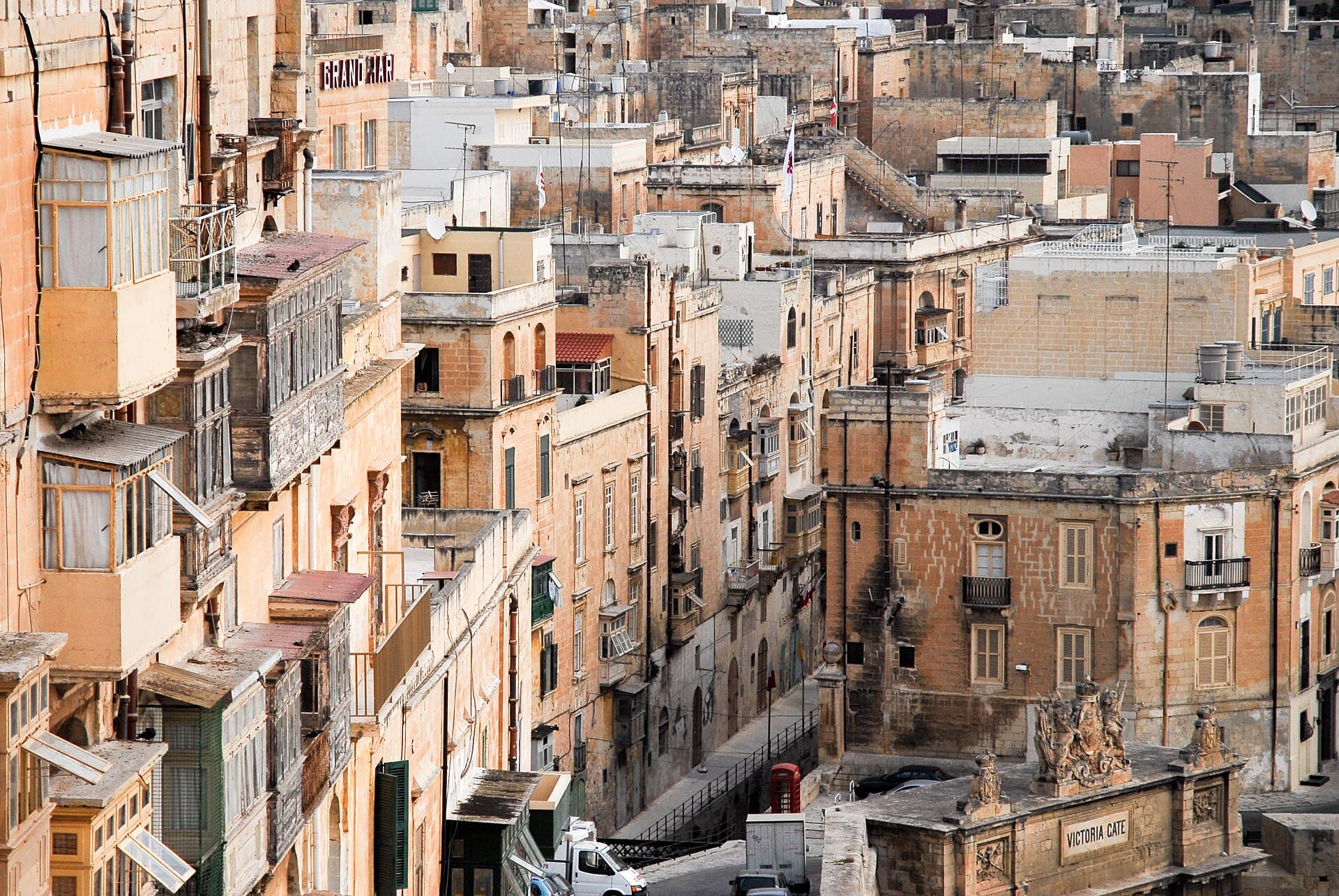
Valletta
One of Europe's smallest capitals and among its most historically rich. Valletta sits on a narrow peninsula between two of the finest natural harbours in the Mediterranean — built by the Knights of St John after the Great Siege of 1565, UNESCO-listed since 1980.
Mstyslav Chernov
Key facts
- Best for
- Baroque architecture and historyGrand Harbour viewsSt John's Co-Cathedral (Caravaggio)Museum of ArchaeologyDay-trip base for the Three Cities
- Getting there
- Bus routes from Sliema, St Julian's, and other areas of Malta arrive at the City Gate terminus — the main bus hub for the island. Journey times vary; check current schedules before travelling.
- The Valletta–Sliema ferry crosses Marsamxett Harbour in around 10 minutes and is a practical alternative to the bus from Sliema.
- From Malta International Airport, the X4 express bus runs to Valletta City Gate. Journey time is approximately 30–40 minutes depending on traffic. Taxis and rideshare services are also available.
- Once inside Valletta, the city is almost entirely pedestrianised — the grid of streets is compact and walkable.
- Official site
- https://www.visitmalta.com/en/a/valletta/
Valletta was purpose-built in the 16th century by the Knights of St John, who had just survived the Ottoman siege of 1565 and wanted a defensible, planned capital. The result is one of the earliest examples of urban planning in Europe — a tight grid of limestone streets laid over a rocky peninsula, flanked by the Grand Harbour to the south and Marsamxett Harbour to the north. The city was listed as a UNESCO World Heritage Site in 1980. Valletta is small enough to walk end-to-end in around 20 minutes, but dense enough to fill a full day with ease. St John's Co-Cathedral contains Caravaggio's largest surviving painting. The Upper and Lower Barrakka Gardens offer the best views of the Grand Harbour. Republic Street is the main pedestrian spine and useful for orientation. The National Museum of Archaeology holds finds from Malta's prehistoric temple period. Valletta operates as a living city — there are residents, government offices, restaurants, and shops alongside the historic sites. It gets crowded on summer mornings when cruise ships are in port; mornings and late afternoons on non-cruise days are quieter.
“Valletta was built by gentlemen for gentlemen — a city of palaces on a peninsula of limestone, with the Grand Harbour on one side and the sea on the other.”
What to see in Valletta
St John's Co-Cathedral
The exterior is plain fortress limestone — intentionally so. The interior is one of the most extravagant Baroque spaces in Europe. Every inch of the nave floor is a marble tombstone for a Knight of the Order. Side chapels are each dedicated to a different langue (the national groupings of the Order). The Oratory contains Caravaggio's Beheading of Saint John the Baptist, his largest and only signed work. Booking ahead is strongly recommended in peak season; the queues without a booking can be long. Managed by Heritage Malta.
Grandmaster's Palace and State Rooms
The seat of the Grandmasters of the Order of St John and later the British Governor of Malta, the Palace is now home to the Office of the President of Malta and the Malta Parliament. Part of it is open to visitors through the Palace State Rooms and the Armoury — check Heritage Malta for current opening arrangements, as access varies.
Upper and Lower Barrakka Gardens
The Upper Barrakka Gardens sit near the top of the city, with a panoramic view of the Grand Harbour, the Three Cities (Vittoriosa, Senglea, and Cospicua), and Fort St Angelo across the water. The noon cannon is fired from the saluting battery below. The gardens are public and free. The Lower Barrakka Gardens, further along the city walls, are quieter and offer a different angle on the harbour entrance.
National Museum of Archaeology
Housed in the Auberge de Provence, this museum contains the best collection of finds from Malta's prehistoric temple period, including the Sleeping Lady figurine and the Venus of Malta. If you plan to visit the temples at Ħaġar Qim or Tarxien, seeing this collection first adds significant context. Managed by Heritage Malta.
The Three Cities ferry
A short ferry crossing from the Valletta waterfront takes you to Birgu (Vittoriosa), the oldest inhabited part of the harbour area — predating Valletta itself. The Inquisitor's Palace there is the only surviving Inquisitor's palace in the world open to visitors. Fort St Angelo, the fortification at the tip of Birgu's peninsula, is also accessible. The ferry is a much more scenic arrival than the road approach.
Best time to visit
Mild temperatures and fewer crowds. Avoid midday in July–August when heat and cruise ship day-trippers peak simultaneously.
Practical tips
How long to allow
A half-day covers a walk along Republic Street, the Upper Barrakka Gardens, and the exterior of St John's. A full day allows you to go inside the Co-Cathedral, visit one or two museums, and take the ferry to the Three Cities. Two days would let you explore at a comfortable pace and cover the National Museum of Archaeology, the Grandmaster's Palace, and a longer walk along the city walls.
Dress code
Shoulders and knees must be covered to enter St John's Co-Cathedral and most churches. Shawls and coverings are available at the entrance if needed.
Tickets
St John's Co-Cathedral, the Grandmaster's Palace State Rooms, and the National Museum of Archaeology all charge entry fees managed by Heritage Malta. Heritage Malta combo tickets cover multiple sites. Check heritagemalta.mt for current prices — these change periodically.
Getting around inside Valletta
Valletta is pedestrianised within the main grid. The city is hilly in places — the streets running east–west (toward the harbour) involve steps or gradients. There is a lift (elevator) from City Gate down to the waterfront level that is useful for those with mobility limitations.
About this guide
Maintained by MaltaPathway
This guide is written from public sources and kept up to date where possible. MaltaPathway is an independent visitor guide and is not affiliated with any official body. Source policy, correction policy, and monetization disclosure live on the About and trust page.
Sources
Related guides
Was this page helpful?
MaltaPathway is an independent guide and is not operated by or affiliated with the Government of Malta, VisitMalta, or any other public authority. Details such as opening hours, prices, and schedules can change — always check official or current sources before relying on time-sensitive information.