

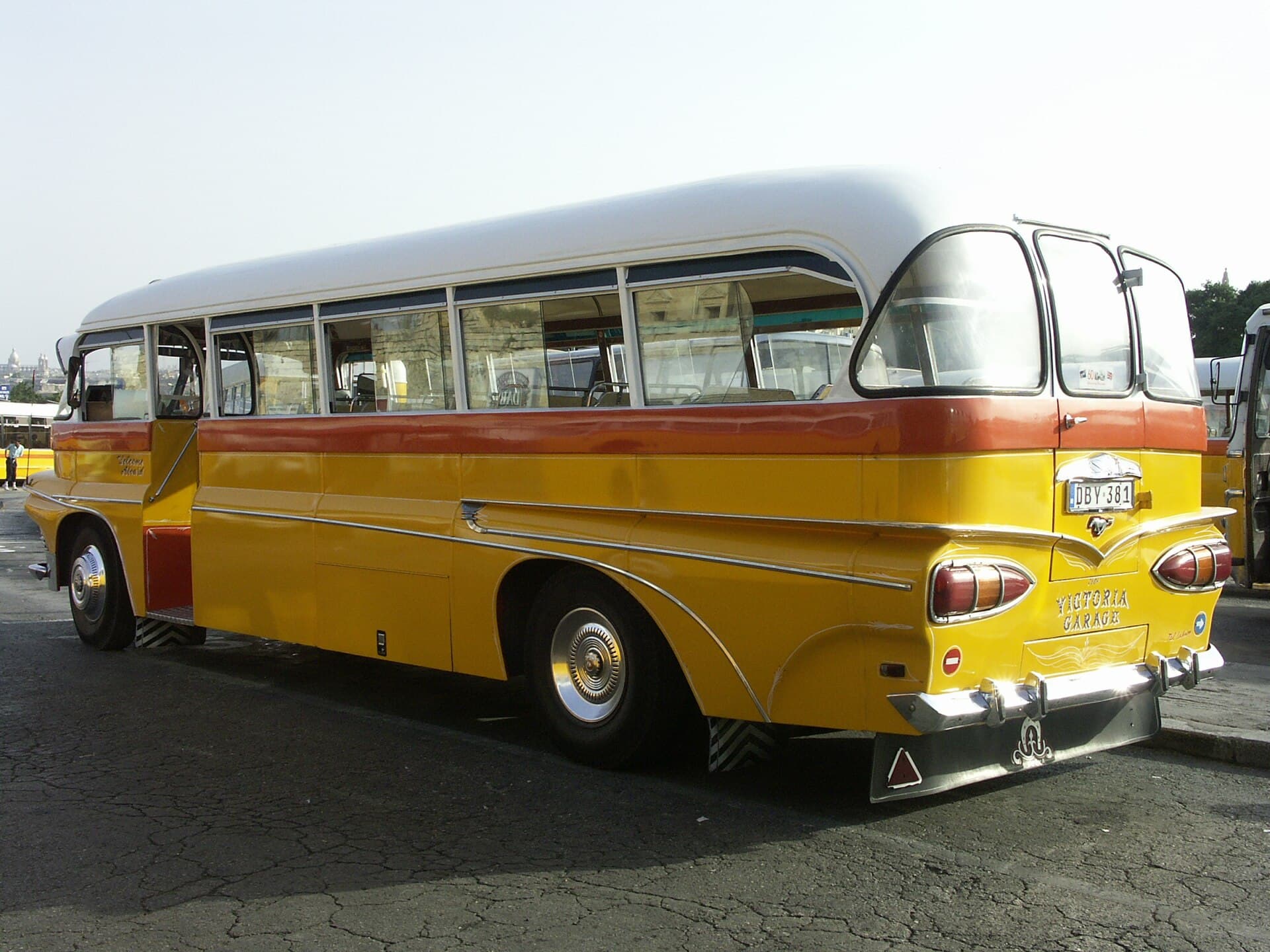
Getting around Malta
Buses, ferries, taxis, and car hire — what visitors actually need and what you can skip.
Photo: Wikimedia Commons — CC BY-SA 2.0
Malta is small — roughly 27 km long and 14 km wide — so getting around as a visitor is more manageable than it looks on a map. A reliable bus network connects the main tourist areas, harbour ferries cut across the water faster than buses on peak-hour roads, and many visitors based in Valletta, Sliema, or St Julian's find they never need a car at all.
This page covers the practical options available to visitors. For journey-specific guides, use the links at the bottom.
By bus — the Tallinja network
Malta's public bus network, operated under the Tallinja brand, covers most visitor destinations on the main island. Buses run from early morning until late evening on the busiest routes. Frequency drops in the early afternoon on some routes, so check the timetable before travelling off-peak.
For visitors, the main decision is whether to buy single tickets, top up a tallinja card, or buy an Explore Malta pass. See the Malta bus card guide for a side-by-side comparison.
Key routes for visitors connect Malta International Airport to Valletta, Sliema, and St Julian's; Valletta to the bus terminus at Floriana; and the north-shore corridor between Sliema, St Julian's, and Bugibba. Buses to Mdina leave from Valletta. Marsaxlokk is reachable on route 81 from Valletta. Routes, numbers, and stop names: check the current timetable at publictransport.com.mt.
By harbour ferry
Two short harbour crossings are genuinely useful for visitors and are faster than buses during congested periods:
- Valletta ↔ Sliema — a ten-minute crossing operates year-round, with more frequent departures in summer. The jetty on the Valletta side is just outside the main city gate area. This is one of the best ways to move between the two waterfronts without backtracking through Floriana.
- Valletta ↔ Birgu (Three Cities) — a short water taxi crossing to Birgu operates in season. Confirm current schedules locally or at the Valletta jetty.
Both crossings are run by private operators; fares and timetables vary by season. Pay on board or check for current pricing before you travel.
From the airport
Malta International Airport (MLA) is in Luqa, roughly 8 km south of Valletta. The public bus, taxi rank, pre-booked transfers, and ride-hailing apps (eCabs, Bolt) all serve the airport. Which one suits you depends on luggage, arrival time, and budget. See the airport transport guide for a detailed comparison of options and costs.
By taxi and ride-hailing
Malta has an official metered taxi service (eCabs is the main licensed operator) and two ride-hailing apps active on the island: eCabs and Bolt. Both apps let you see the fare estimate before you confirm a booking.
Street hailing is uncommon outside the airport rank. For most journeys, booking through the eCabs or Bolt app gives you a price upfront and a tracked pickup. Journey costs within the main tourist corridor (Valletta, Sliema, St Julian's, Birgu, Mdina) are relatively modest given the distances involved; check current in-app prices at time of booking.
By car
A car is not necessary for a typical visitor itinerary in Malta. The main tourist areas — Valletta, Sliema, St Julian's — are compact, have limited and expensive parking, and are well-served by buses and ferries. Driving into Valletta is restricted by the city gate traffic management system.
Where a car does add value: reaching the rural centre and south (Mdina hinterland, Dingli Cliffs, Marsaxlokk) without bus layovers, and covering Gozo independently. Most international car hire brands operate at Malta Airport. Malta drives on the left; roads are generally well signed but can be narrow in village cores.
Getting to Gozo
Gozo is a separate island 5 km north of Malta, reachable by two main options:
- Car ferry (Gozo Channel) — the standard crossing from Ċirkewwa (north Malta) to Mġarr (Gozo). Takes about 25 minutes; runs very frequently, including at night. You do not need a booking for the Ċirkewwa-to-Mġarr direction; the return crossing can queue in peak season. Fares are charged on the Malta-to-Gozo leg only.
- Gozo Fast Ferry — a passenger-only catamaran operating between Valletta and Mġarr, Gozo. Faster than the car ferry route, and avoids the bus to Ċirkewwa. Check the current timetable and book in advance for peak departures.
See the Gozo day trip guide for full routing options including how to reach Ċirkewwa from Valletta and Sliema by bus.
What most visitors actually use
First-time visitors staying in Valletta, Sliema, or St Julian's typically rely on a combination of buses (for longer trips and airport arrival), the Valletta–Sliema ferry (for waterfront crossings), and occasional taxis (late nights, early mornings, or heavier luggage days). A car becomes more useful from day three onwards if you want to reach quieter parts of the island without changing buses.
About this guide
Maintained by MaltaPathway
This guide is written from public sources and kept up to date where possible. MaltaPathway is an independent visitor guide and is not affiliated with any official body. Source policy, correction policy, and monetization disclosure live on the About and trust page.
Sources
Related guides
Was this page helpful?
MaltaPathway is an independent guide and is not operated by or affiliated with the Government of Malta, VisitMalta, or any other public authority. Details such as opening hours, prices, and schedules can change — always check official or current sources before relying on time-sensitive information.